Enliven
health & wellness, built for everyone
A white-label health and wellness platform that started as a corporate wellness product at LiveHealthier and grew into a platform for Medicaid and Medicare members at Envolve, after the Centene acquisition. I led its design from the first wireframes through every phase of launch.

The challenge
One platform that every employer could make their own.
Our clients were employers who wanted healthier, more productive people, and the research backed them: healthier employees cost less and do better work. What they did not want was a different tool for every part of wellness.
They needed one flexible program that could track health, connect people with coaches, run challenges, deliver the right content, and book biometric screenings. It had to meet HIPAA and Section 508, plug into the apps people already used, give admins a CMS, and wear each client’s brand. And it had to be fully accessible, so every employee could take part.
What it had to do
My role
I led the design from the first research sessions to the final Android release.
Research
Ran the needs assessment with clients, health experts, and employees to define what the platform had to do.
Interaction & visual design
Designed the web app, the iOS and Android apps, and the card system that ties them together.
Testing
Planned and ran usability testing in UserZoom and turned the findings into design changes.
Accessibility
Set the accessibility standard and built accessible versions of every client palette.
Delivery
Partnered with the .NET and mobile engineers, ran design QA on every build, and worked with health experts on content review.
Key decisions
Four decisions that shaped it
MODULAR CARDS
Every program became a set of configurable cards.
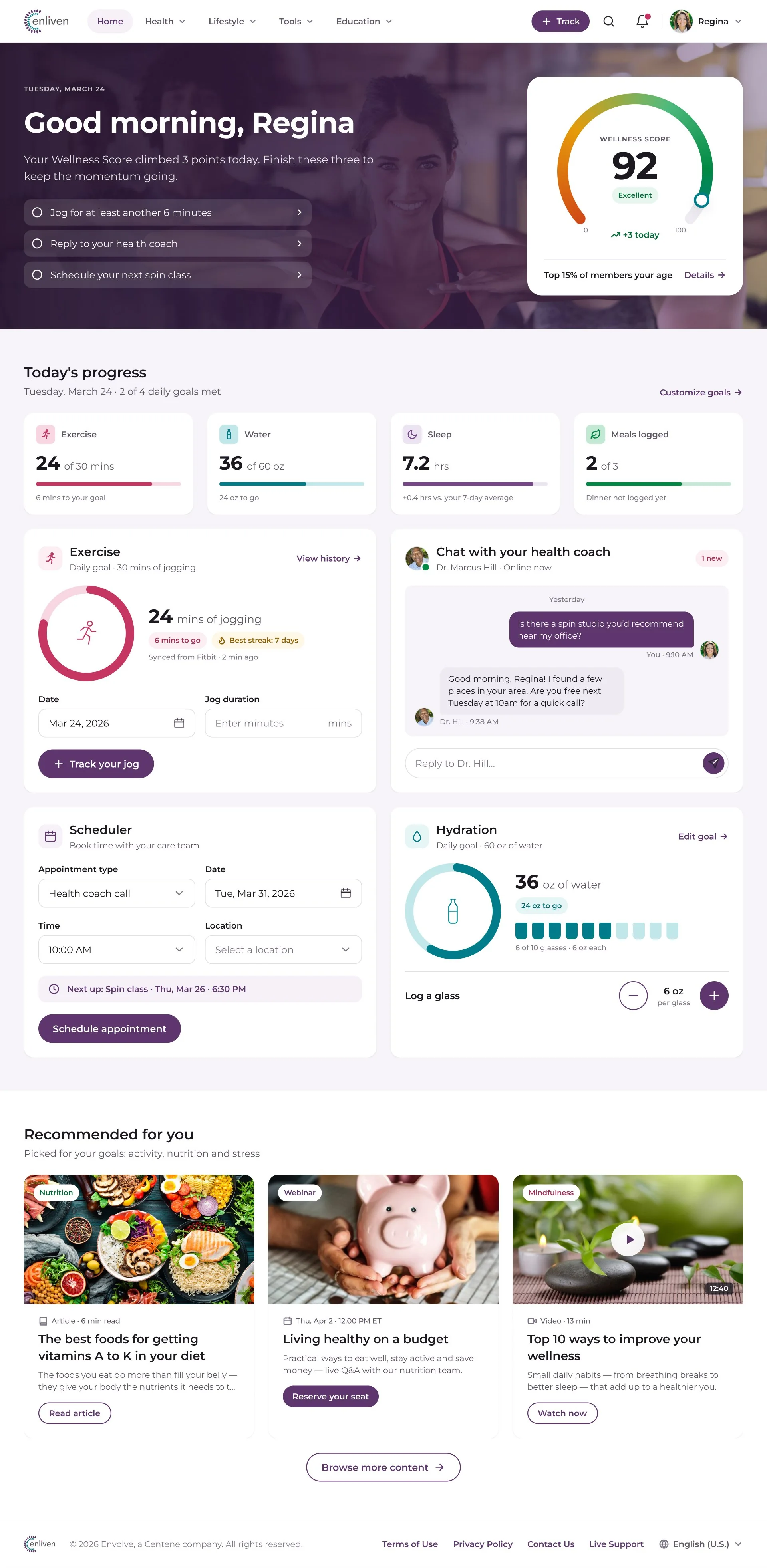
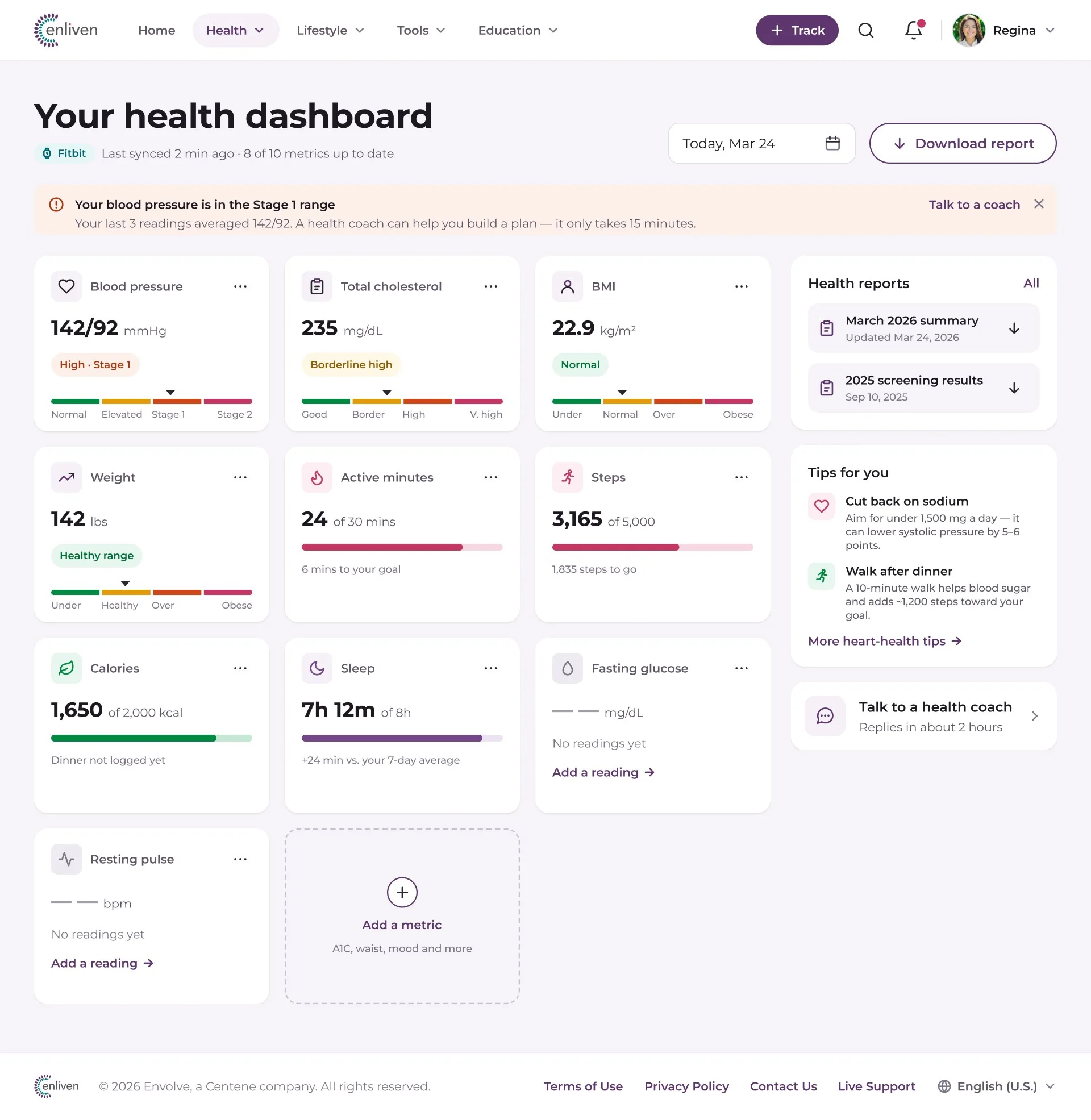
Instead of a fixed layout, I designed modular cards that each client could switch on, order, and configure. On the health dashboard every metric is its own card, from blood pressure to sleep, and members can add the ones that matter to them. One layout system served every employer without custom builds.
TRACKING
Tracking that meets people where they already are.
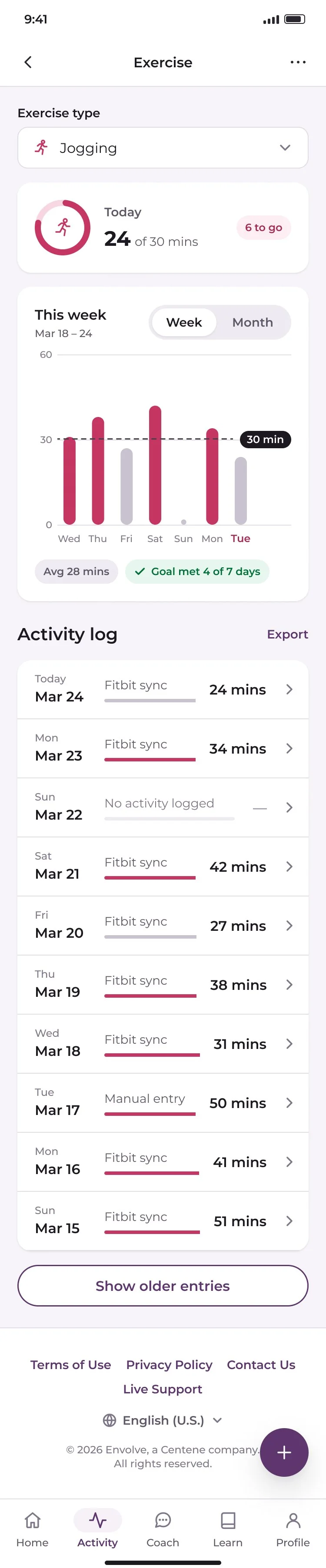
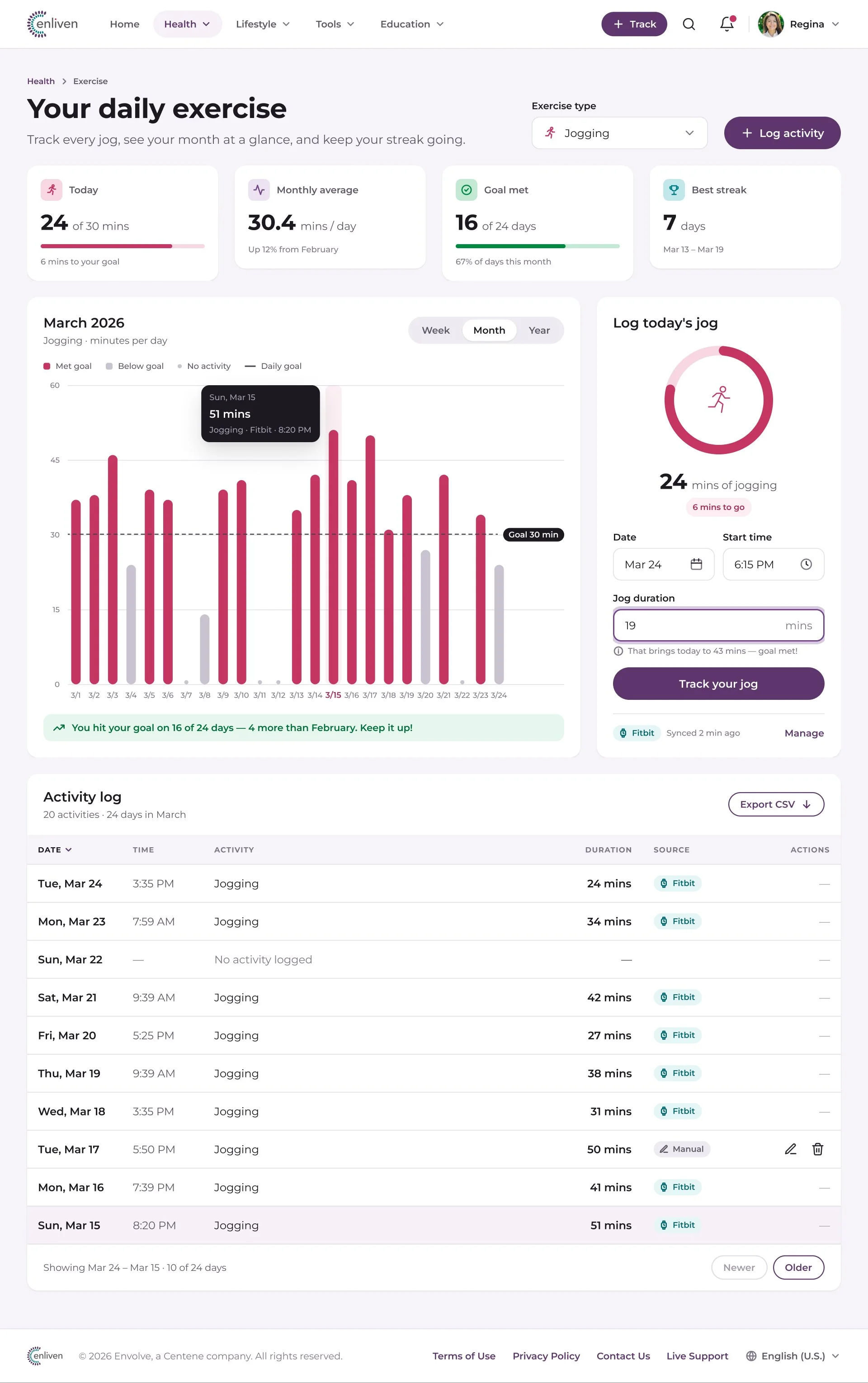
Members could log exercise, sleep, water, nutrition, and steps by hand, or connect Fitbit, MyFitnessPal, or Runkeeper and let it fill in automatically. Every tracker shows progress toward a recommended goal, with the same pattern on desktop and mobile.
PERSONALIZED CONTENT
Content matched to each member’s health, not a generic feed.
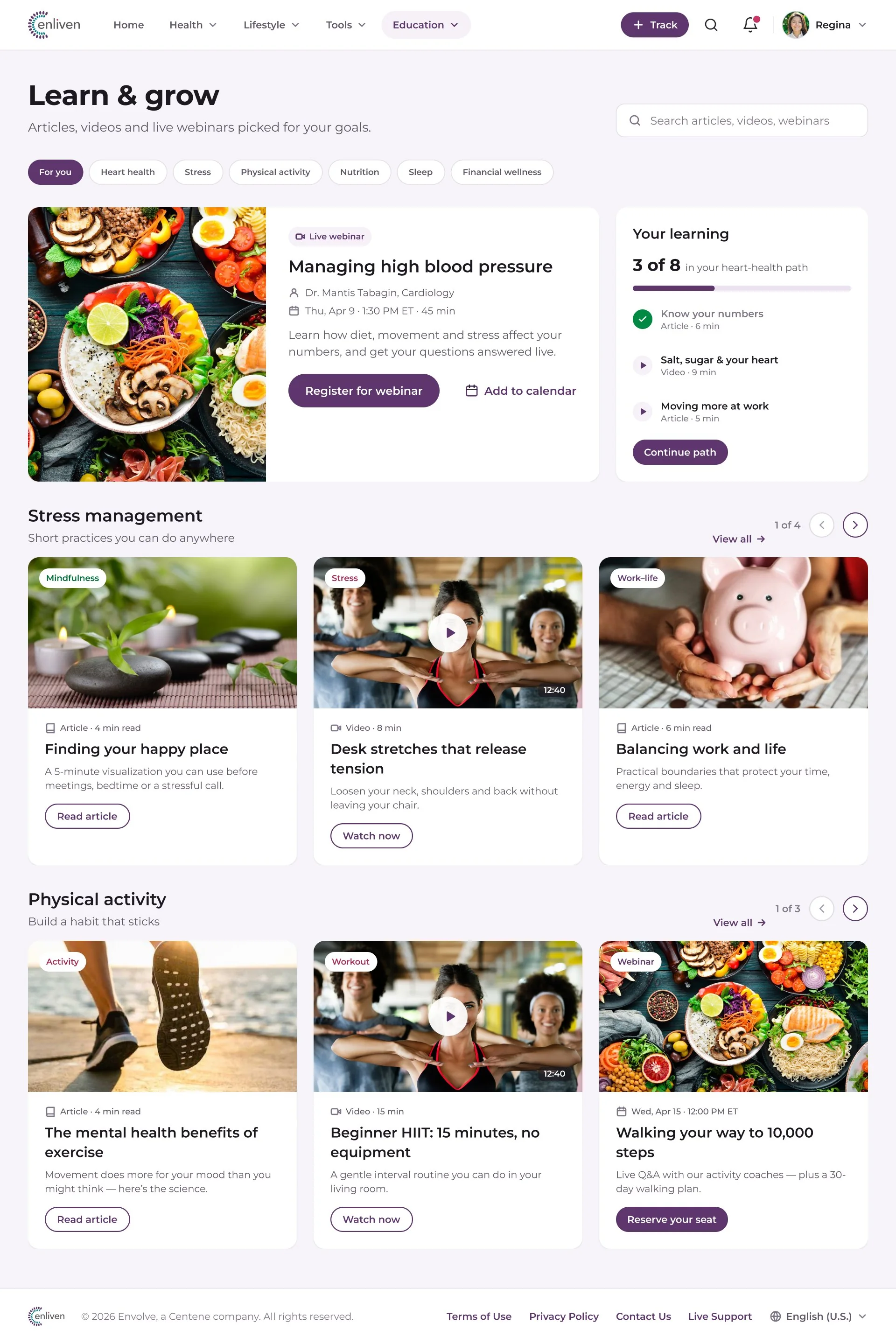
Content cards delivered videos, articles, and webinars based on each member’s health and wellness status. Someone reporting high stress saw stress management first, so the platform felt like it was paying attention.
ACCESSIBLE BRANDING
Every client’s brand, adjusted until it passed.
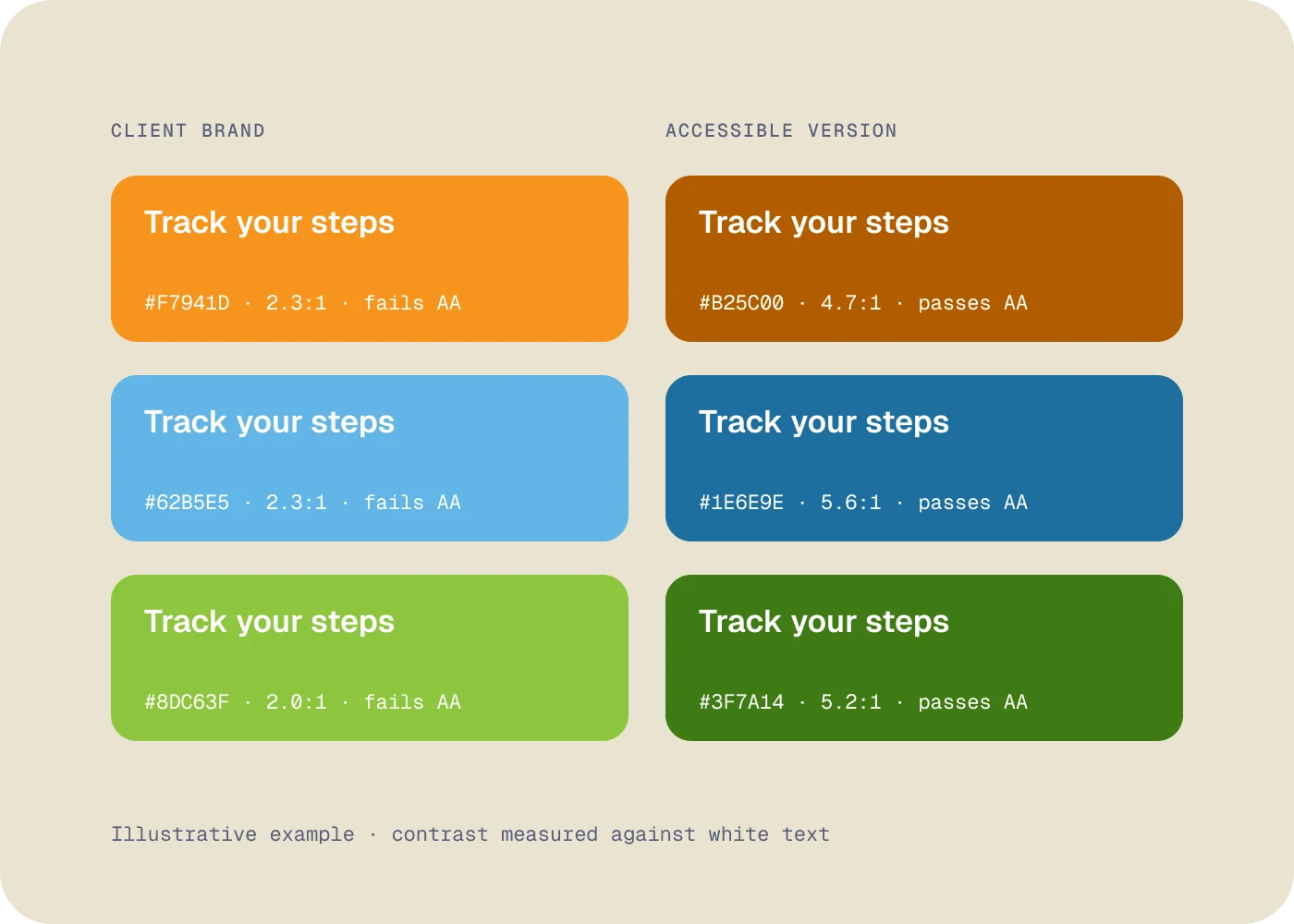
Re-skinning meant clients brought their own colors, and many failed contrast. Rather than reject a brand, I created an accessible version of each palette: the same hue, shifted until text and controls met Section 508 contrast.
Process
How it came together
Research
Needs assessment with clients, health experts, and employees.
Wireframes & prototypes
Flows and interactive prototypes for every core task.
Usability testing
Sessions in UserZoom fed each round of refinement.
Accessibility
Accessible palettes and 508 checks built into the design.
Design QA
Every build reviewed against the designs before release.
Phased launch
Web first, then integrations, then iOS and Android.
Launch & evolution
Launched in phases
PHASE 1
Web app
The first version of the web application.
PHASE 2
Web, expanded
Third-party app integrations and more features.
PHASE 3
iOS app
Native iPhone app with the same card system.
PHASE 4
Android app
Completing the mobile rollout.
ACQUISITION
Centene
LiveHealthier is acquired and moves under Envolve.
EVOLUTION
Medicaid & Medicare
The platform shifts to serve Medicaid and Medicare members.
What I learned
HR process vs. health expertise
Client HR teams often wanted the program to mirror their internal processes, even when health experts recommended otherwise. I learned to bring both groups into the same reviews and let evidence about member outcomes settle the disagreement.
Brand vs. accessibility
Clients cared deeply about their colors. Showing a brand’s accessible version next to the original, with the contrast numbers, turned a compliance argument into a design choice they were happy to make.
Results
Members and clients said the program made healthier habits easier and the interface simple to use. Enliven gave every client a branded, accessible program that educated employees and encouraged them to act.
Next case study — 02