Tactys
the address book that keeps itself up to date
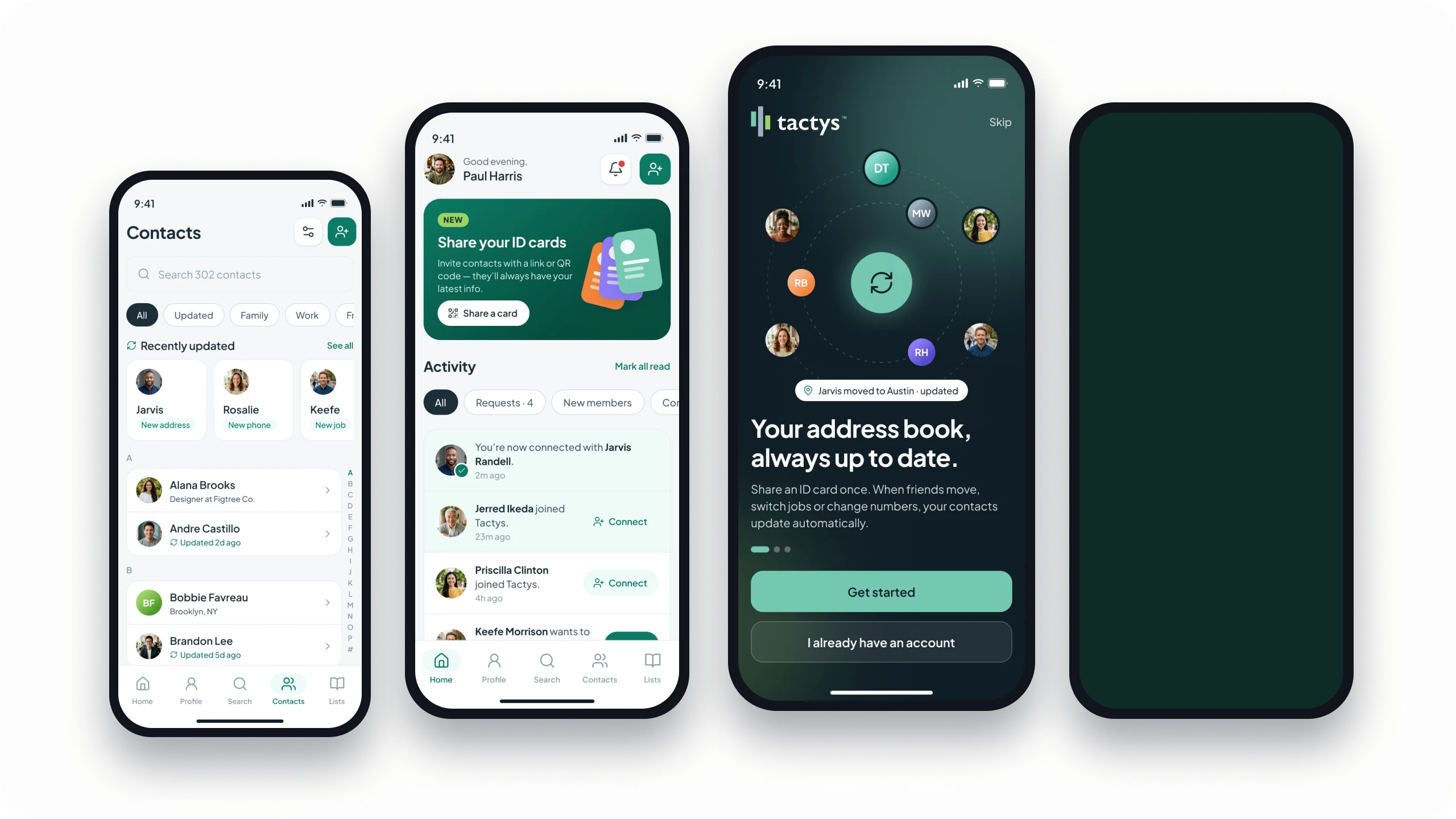
A consumer app that keeps everyone’s contact details current without anyone lifting a finger. People share ID cards instead of phone numbers, choose exactly what each group sees, and revoke access anytime. I took it from the first sketches to an investor-ready beta, and recently redesigned the full experience.
The challenge
Address books go stale the moment you save a contact.
People move, switch jobs, and change numbers, and nobody tells everyone. The cost shows up at the worst moments: wedding invitations, birthday cards, and baby shower gifts sent to addresses that no longer exist.
Sharing contact details is also all or nothing. You either hand someone everything or nothing at all, and once it’s shared you can’t take it back. Tactys needed to keep contacts current automatically while giving people real control over what they share and with whom.
Goals
Always current
Contact details update automatically when the other person changes them.
Control by default
Choose what each group sees, and revoke it anytime.
Effortless to start
Sign in with Apple, Google, or Facebook and be set up in three steps.
Built to spread
Every search and invite brings new people into the network.
My role
I designed Tactys end to end, from first sketches to the beta we showed investors.
Wireframes & flows
Sketched the address book, ID cards, and invite flows, and mapped every path a new member could take.
Prototypes
Built interactive prototypes to test the idea before a line of code was written.
User testing
Tested with real users and used what we learned to simplify sharing and onboarding.
Hi-fi UI & beta
Designed the high-fidelity app that shipped to beta for investor presentations.
Redesign
Rebuilt the full experience with a new visual system, social sign-in, guided setup, and a new app icon.
Key decisions
Four decisions that shaped it
ID CARDS
Share a card, not your whole life.
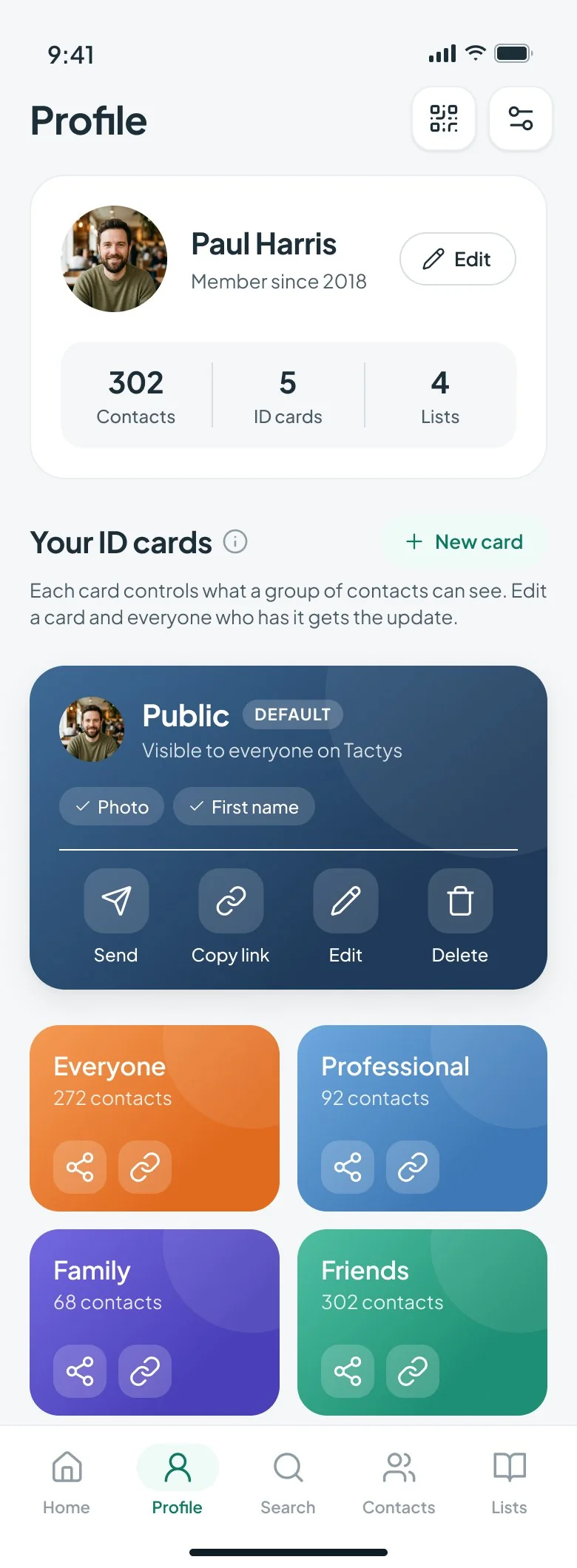
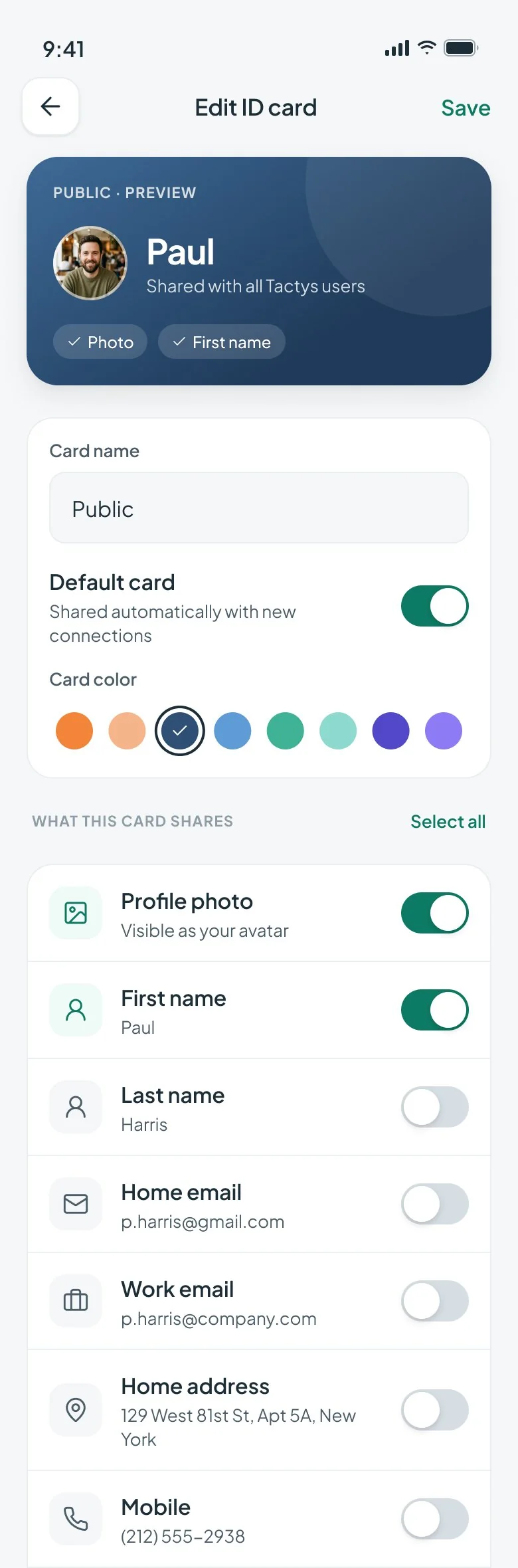
Instead of handing over a phone number and hoping for the best, people share ID cards: Public, Family, Professional, Friends. Each card controls exactly which details it reveals, from photo and name to home address, and anyone can be moved to a different card or cut off at any time.
ALWAYS CURRENT
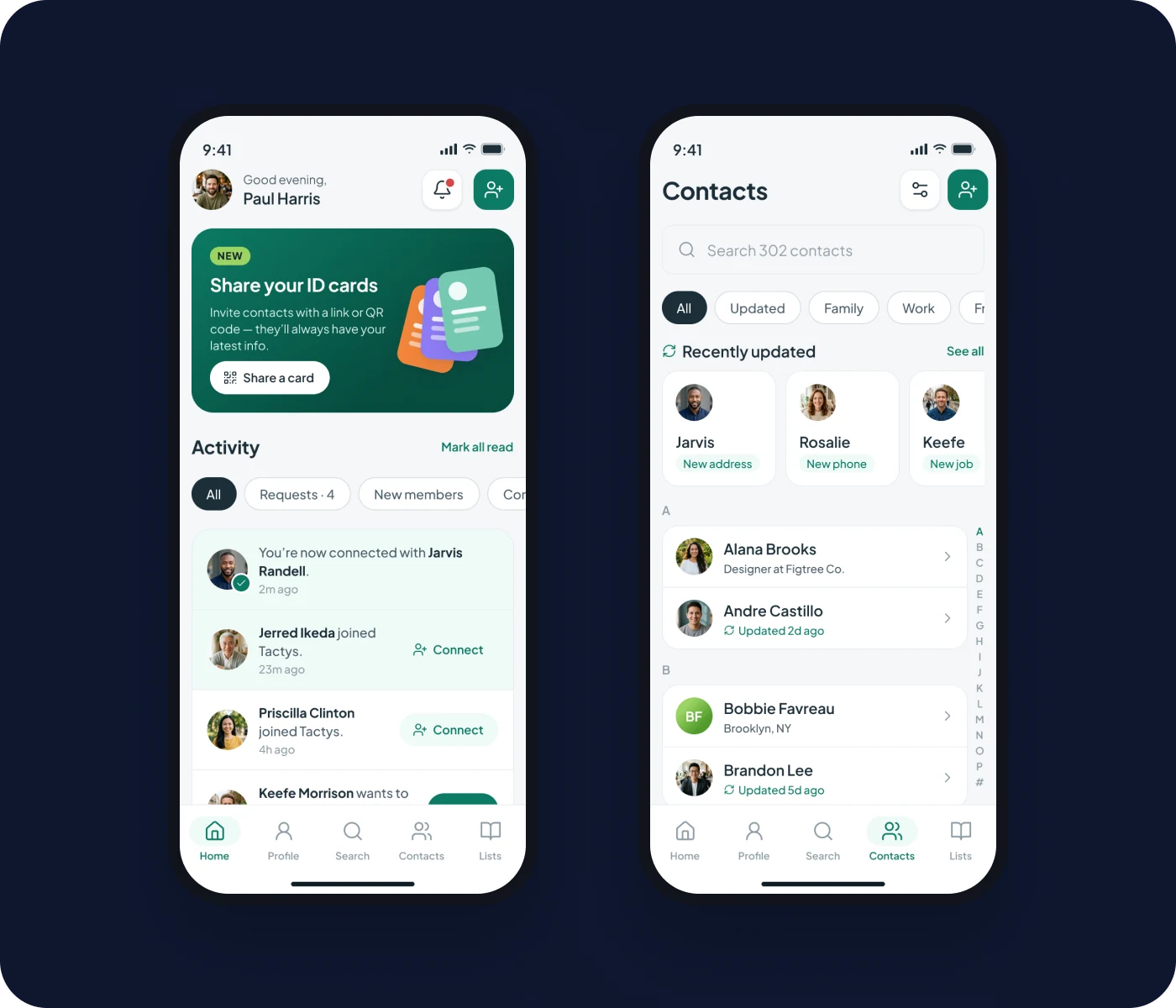
When someone moves, your address book already knows.
Updates arrive on their own. The home feed shows who joined and who changed what, and the contacts list surfaces recently updated people first, so the payoff of the product is visible every time you open it.
ONBOARDING
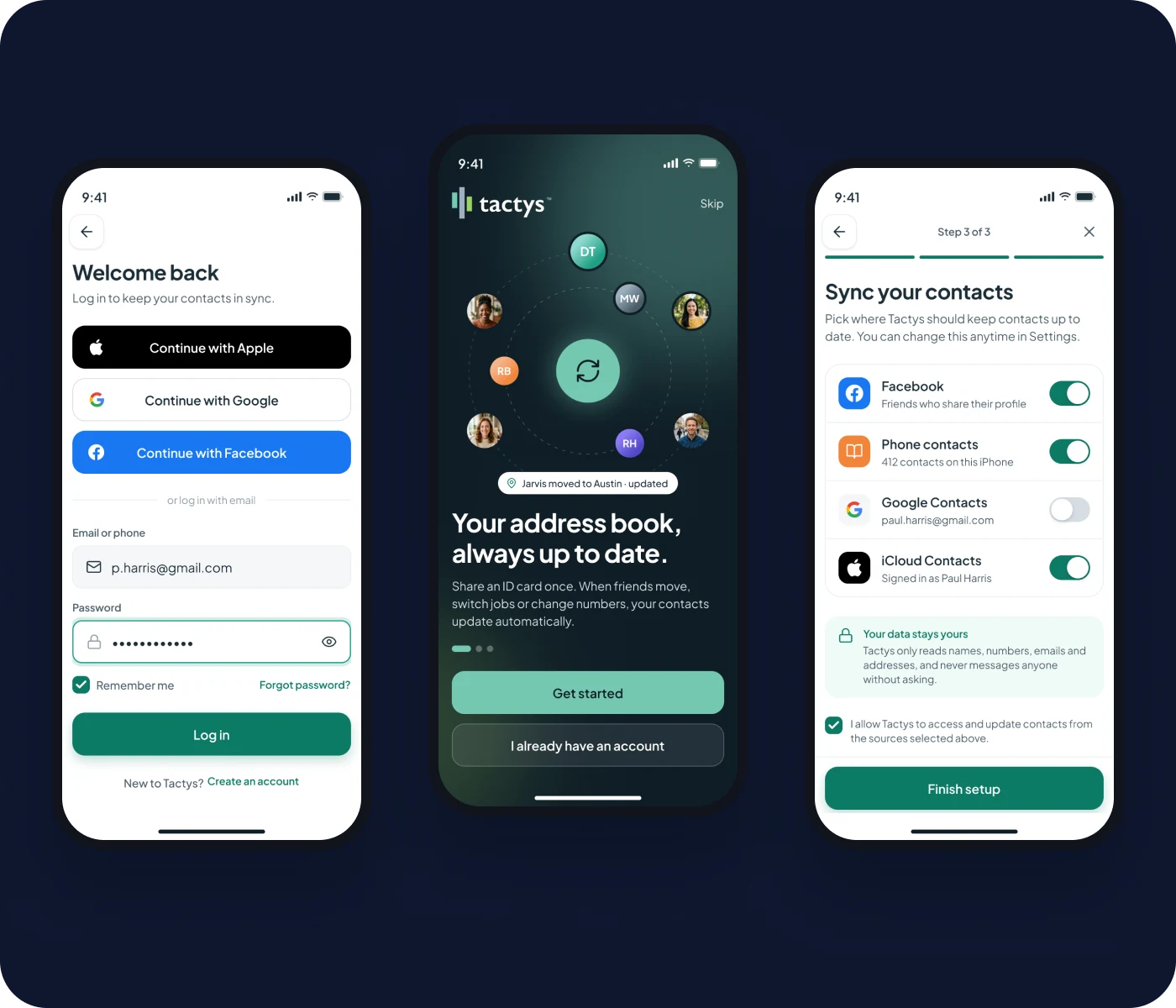
Three taps to a living address book.
The redesign added Apple, Google, and Facebook sign-in alongside email, then a three-step setup: your number, your address, and the contact sources to sync. Each step explains why it matters and can be skipped.
GROWTH LOOP
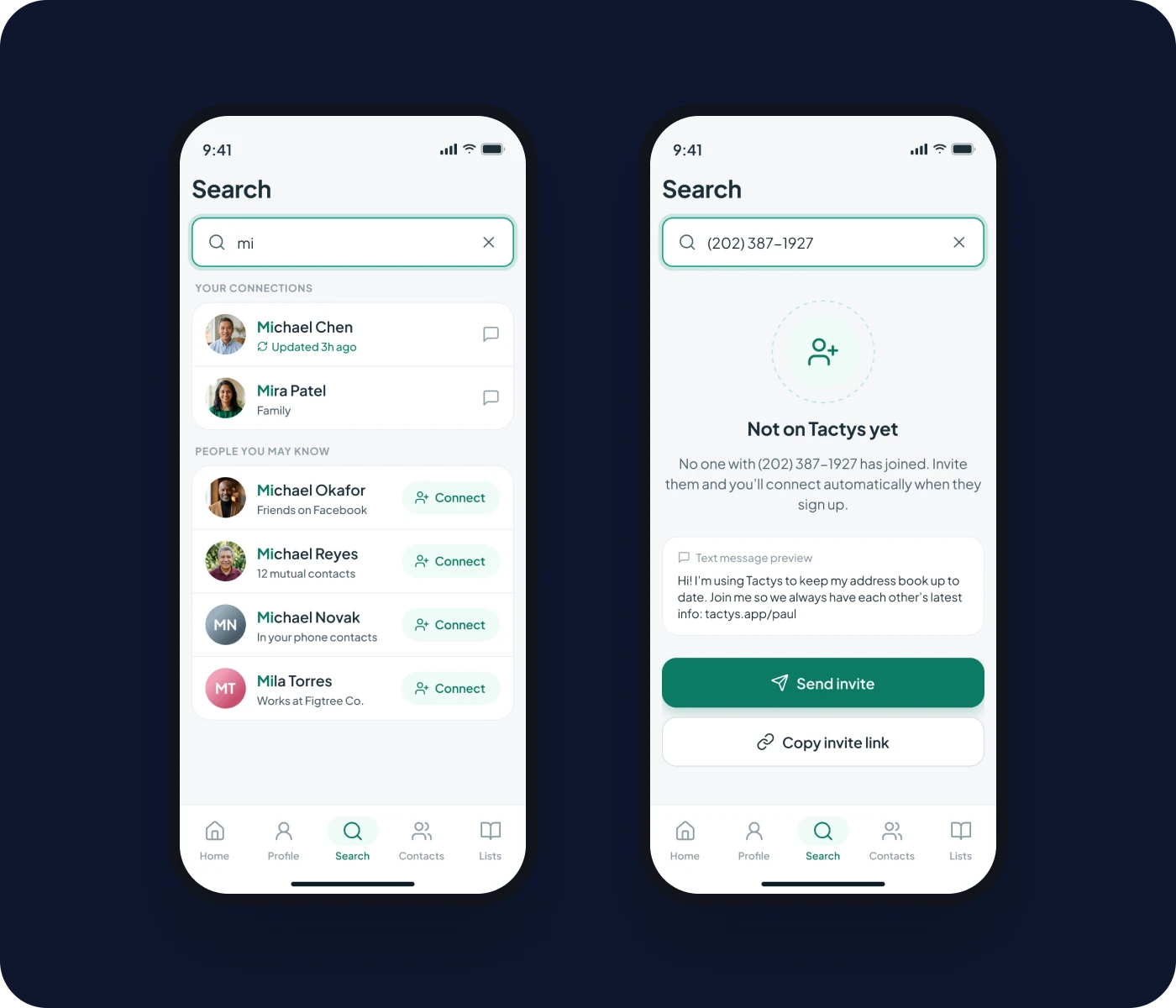
Every search is a chance to grow the network.
An address book only works if your people are on it. Search shows connections and people you may know, and when someone isn’t on Tactys yet, one tap sends an invite. Incoming requests let you pick which card to share before you accept.
The redesign
A new look for a trusted utility
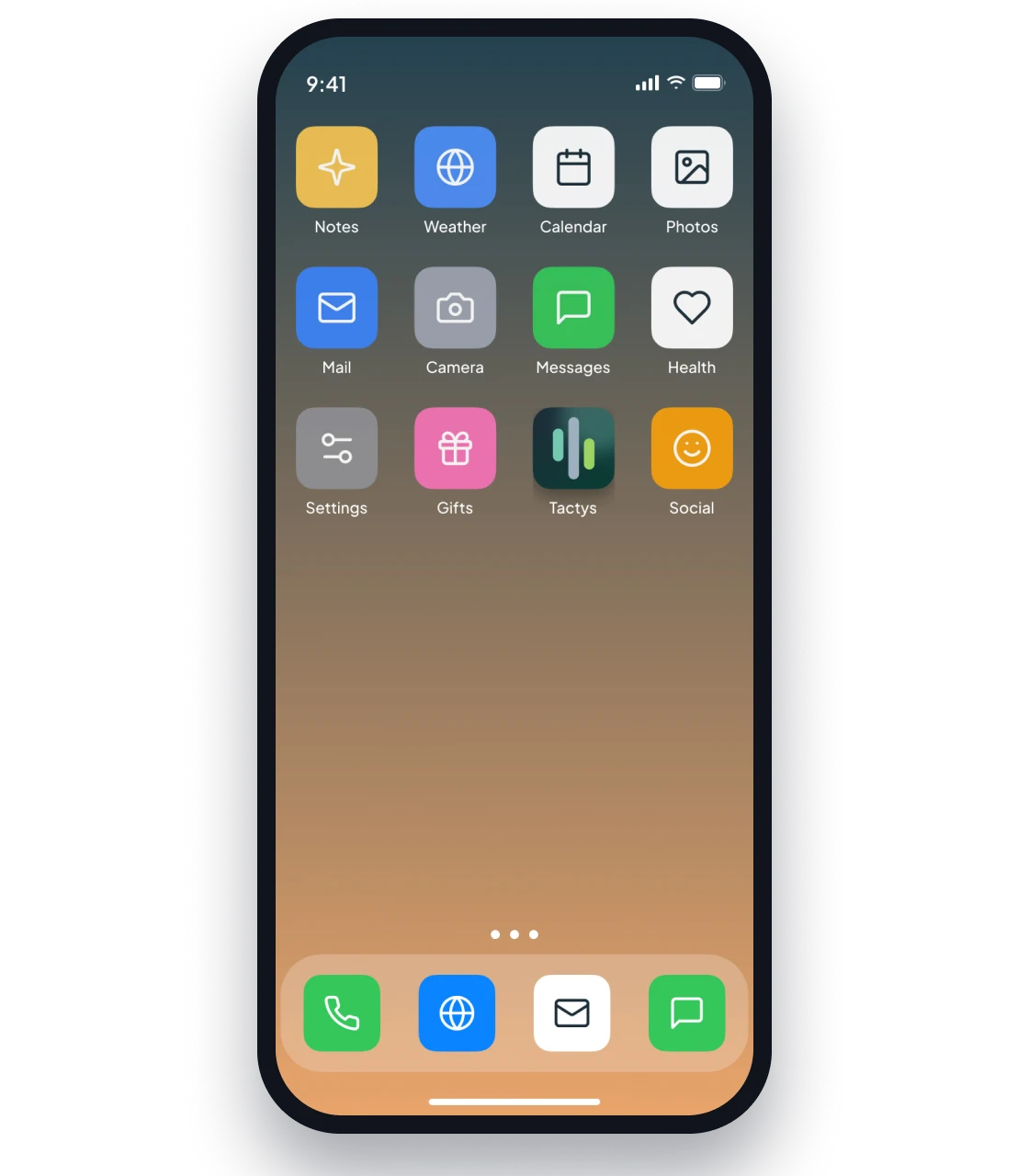
The original orange-and-purple palette felt playful but not trustworthy enough for something that holds your home address. The redesign moves to a calm deep green, a single bright accent, and a rounded app icon built from the brand bars that reads clearly on light and dark wallpapers.
Outcome
Tactys reached beta and was presented to investors. It didn’t raise the funding to launch, but the idea still holds: people want an address book that stays current and puts them in control of what they share.
Show the payoff early
A self-updating address book is invisible until something changes. Putting recent updates on the home screen made the value obvious from the first week.
Trust is a design problem
People will only share their home address if they can see and control where it goes. Cards, previews, and one-tap revoke did more for trust than any privacy copy.
Next case study — 01